 Chess
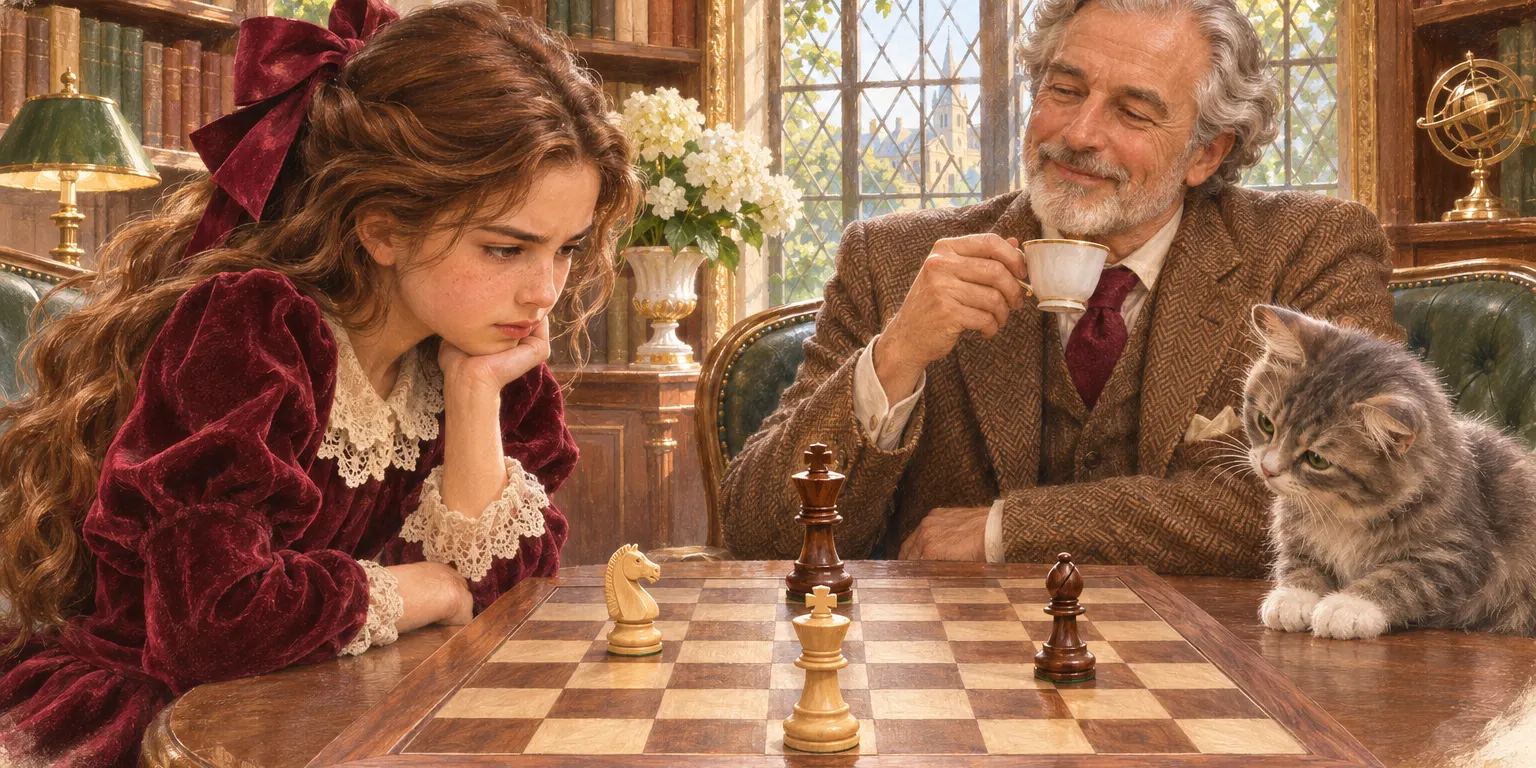
The fastest way to get better at chess is to solve lots of puzzles. Every puzzle here comes from this site's articles on openings, tactics, checkmates and endgames, sorted into four sets by difficulty. The answers are hidden: think first, then open the answer to check. Want to try it in a real game? You can always go back and play chess online against the computer.
How to get the most out of puzzles
- Check whose move it is: every puzzle says "White to move" or "Black to move".
- Look for checks, captures and threats first: go through every check and every capture. The answer is usually one of them.
- Decide before you look: it's fine to get it wrong. When you compare with the answer, ask yourself which move you missed.
- Stuck? Go back to the article: under every puzzle there's a "From" link to the article with the full explanation.
- Reading the answers: answers are written in algebraic notation. For example,
Qh7#means the queen moves to h7 and gives checkmate. If that looks confusing, read how to read chess notation first.
Puzzle sets
- Mate in One PuzzlesIt's your move, and one move gives checkmate. The best first set for beginners.
- Mate in Two PuzzlesYour first move leaves your opponent only one reply, and your second move is mate. Practice calculating two moves ahead.
- Tactics PuzzlesPuzzles where a move or two wins material: forks, pins, skewers, discovered attacks, deflection…
- Endgame PuzzlesKing and pawn, rook endgames, opposition, zugzwang… learn these and you'll actually finish off your won games.
Which set to start with
- You just learned the moves: start with mate in one. You only need to find one checkmating move, which is the easiest way to build confidence.
- Mate in one feels easy: try mate in two, and learn to give check first and drive the king into a dead end.
- You want to stop dropping pieces: do the tactics puzzles and practice forks, pins and skewers.
- You want to finish off won games: do the endgame puzzles and learn to turn an extra piece into a win.
Frequently asked questions
Can I trust the answers?
Yes. Every answer was replayed move by move by a rules engine, to make sure each move is legal and really gives mate or wins material. The endgame results were also confirmed with a tablebase.
Do I have to do them in order?
No. Just pick the set you want to work on. Within a set, the puzzles roughly follow the order of the articles: openings, tactics, checkmates, endgames.
What else can I do after the puzzles?
The best practice is real games. After each game, look back and see whether you missed a check or a fork. You can also use the "Play this opening against the computer" button in the articles to practice a position directly.
Give it a try
After a few puzzles, open free online chess and play a real game against the computer. See if you can find the same ideas over the board. To learn the rules from the start, read the how-to-play guide. For a different challenge, go back to play chess against the computer on the home page and pick an opponent.